english grammar modals chart. It works with main verbs to convey a rich array of meanings. In this reference, you will explore what modal verbs are, see a list of common ones, and learn the rules for using them.
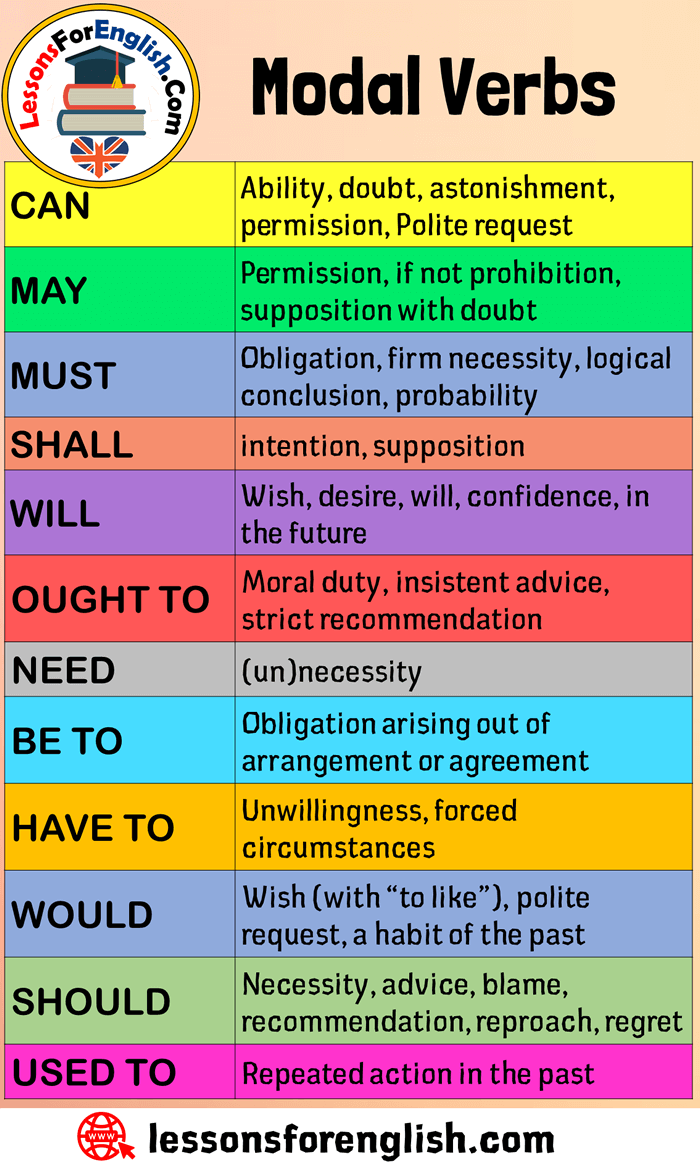
english grammar modals chart Modals / modal verbs express degree of necessity, advisability and certainty. Actual sentences containing modal verbs and. Modal verbs are helping verbs that are used along with main verbs to represent the ability, possibility and probability of a subject to do an action and emphasise the necessity of an.

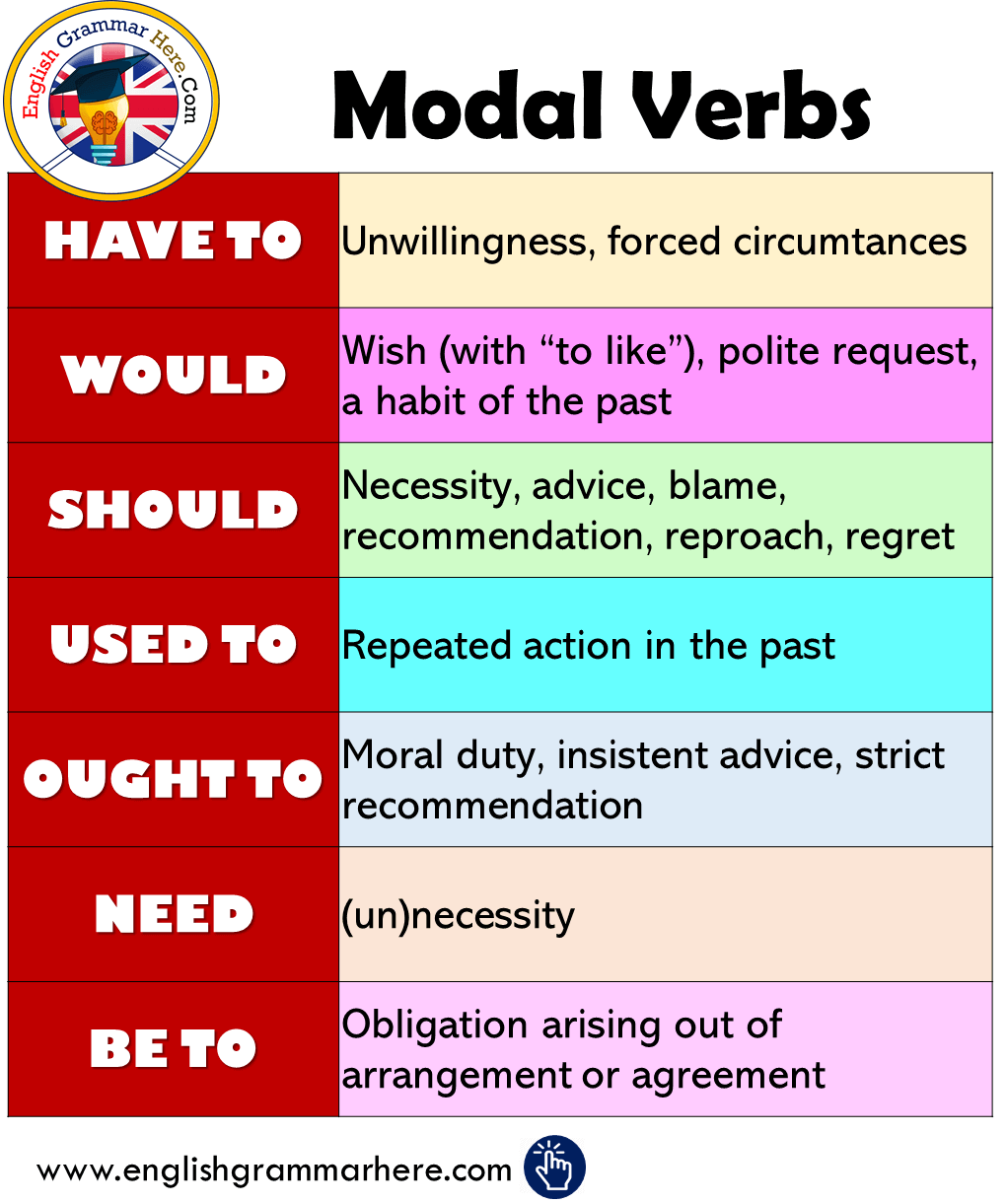
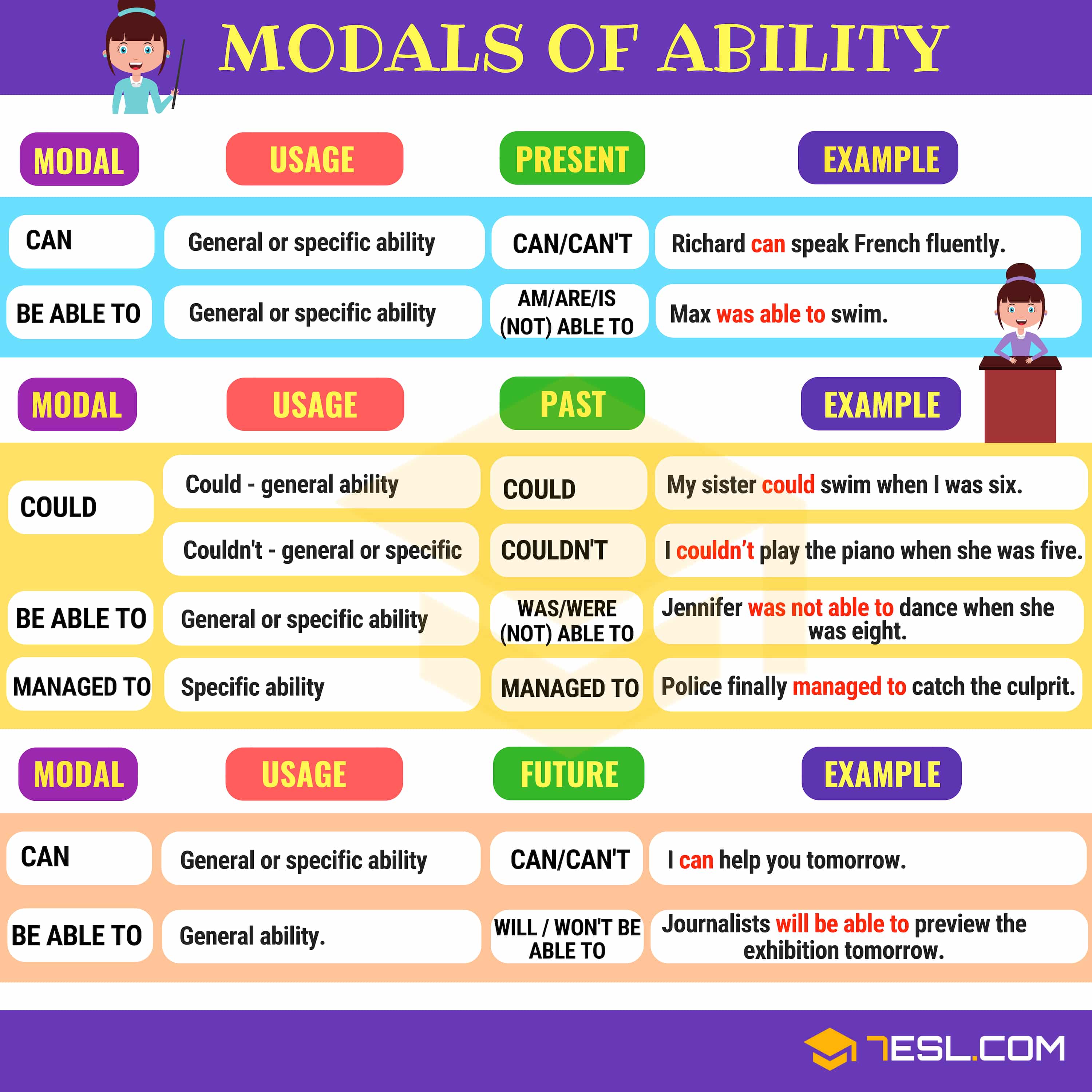
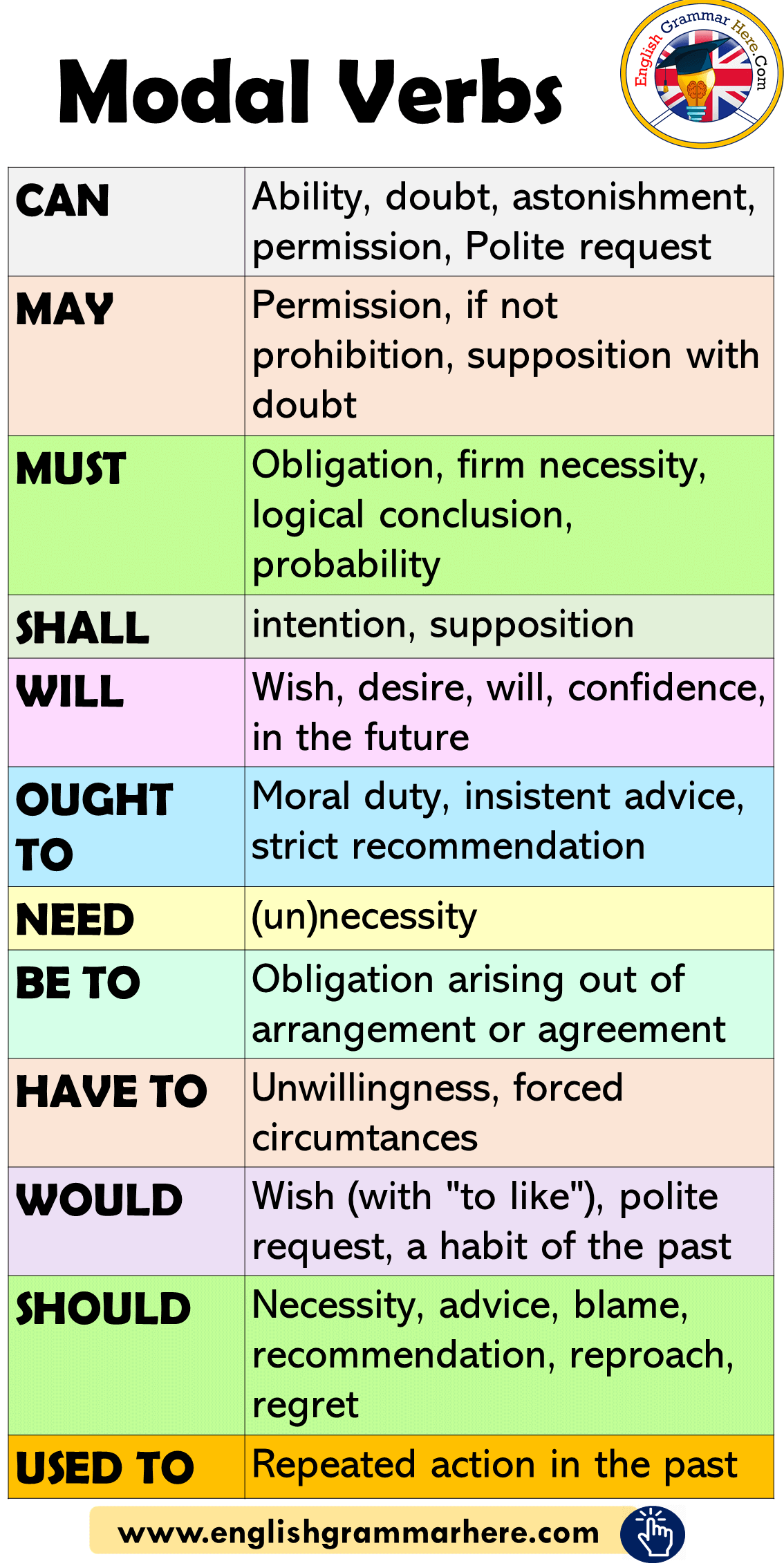


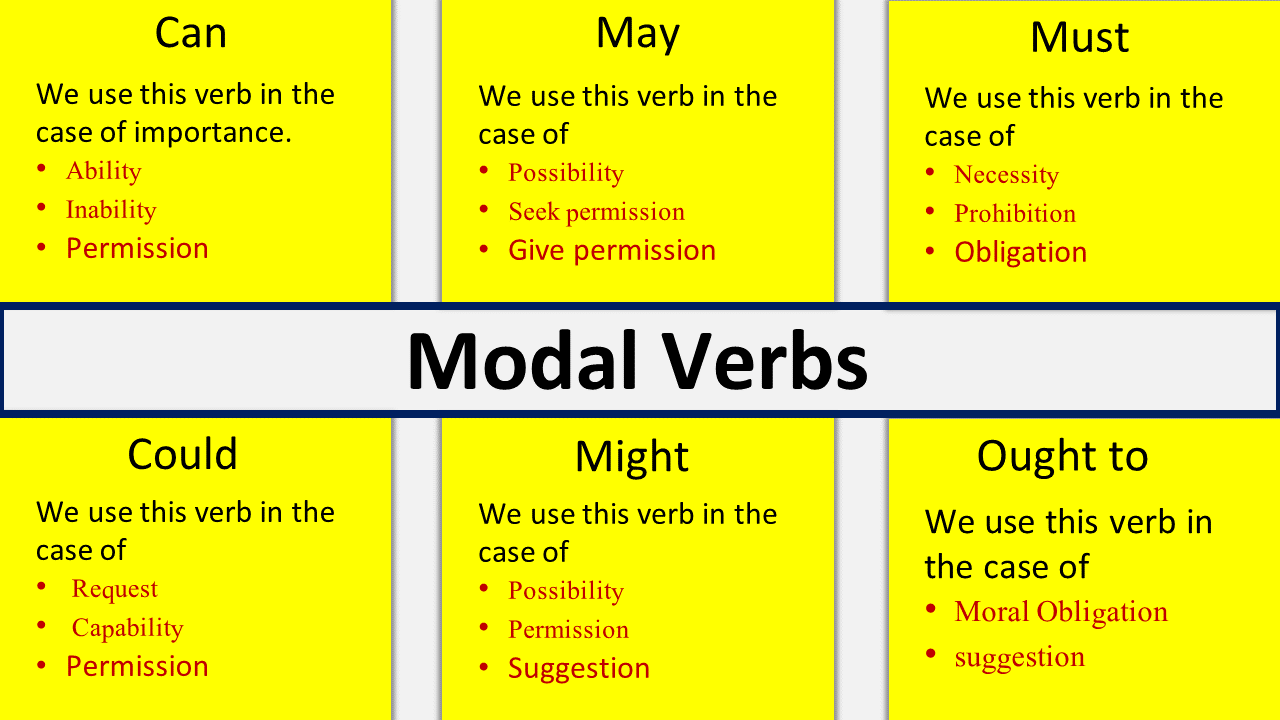
Modals / Modal Verbs Express Degree Of Necessity, Advisability And Certainty.
In this reference, you will explore what modal verbs are, see a list of common ones, and learn the rules for using them. Mustn't vs don't have to. Modal verbs are helping verbs that are used along with main verbs to represent the ability, possibility and probability of a subject to do an action and emphasise the necessity of an.
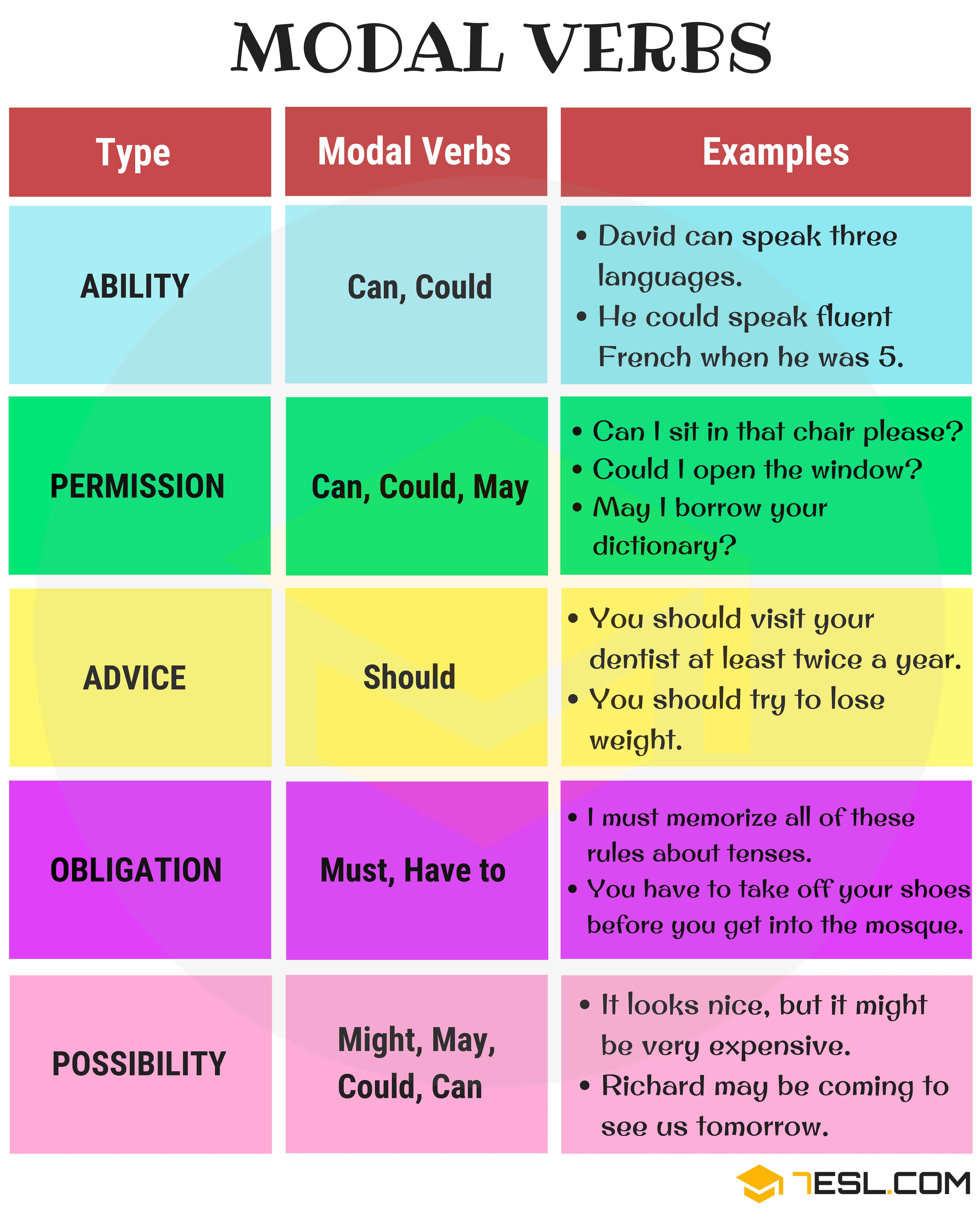
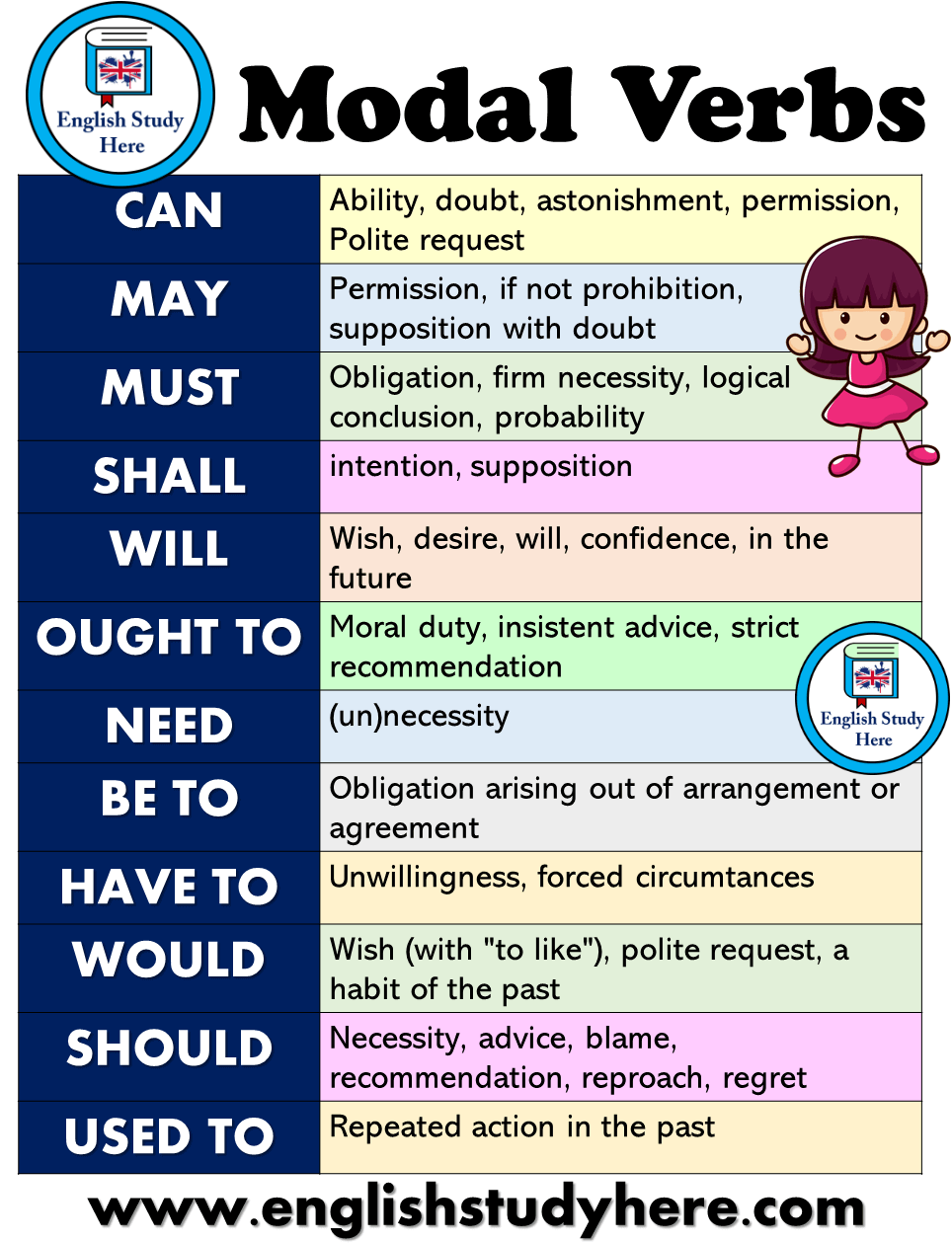
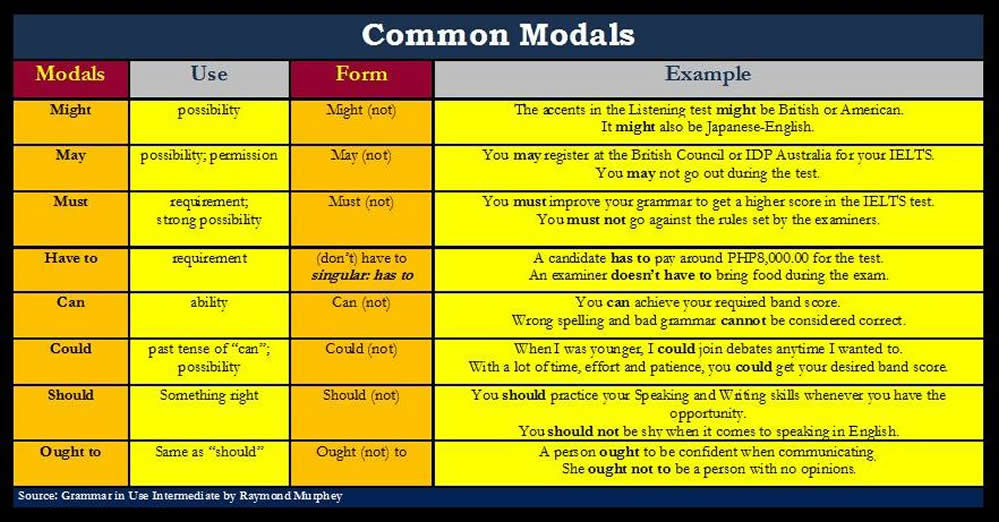
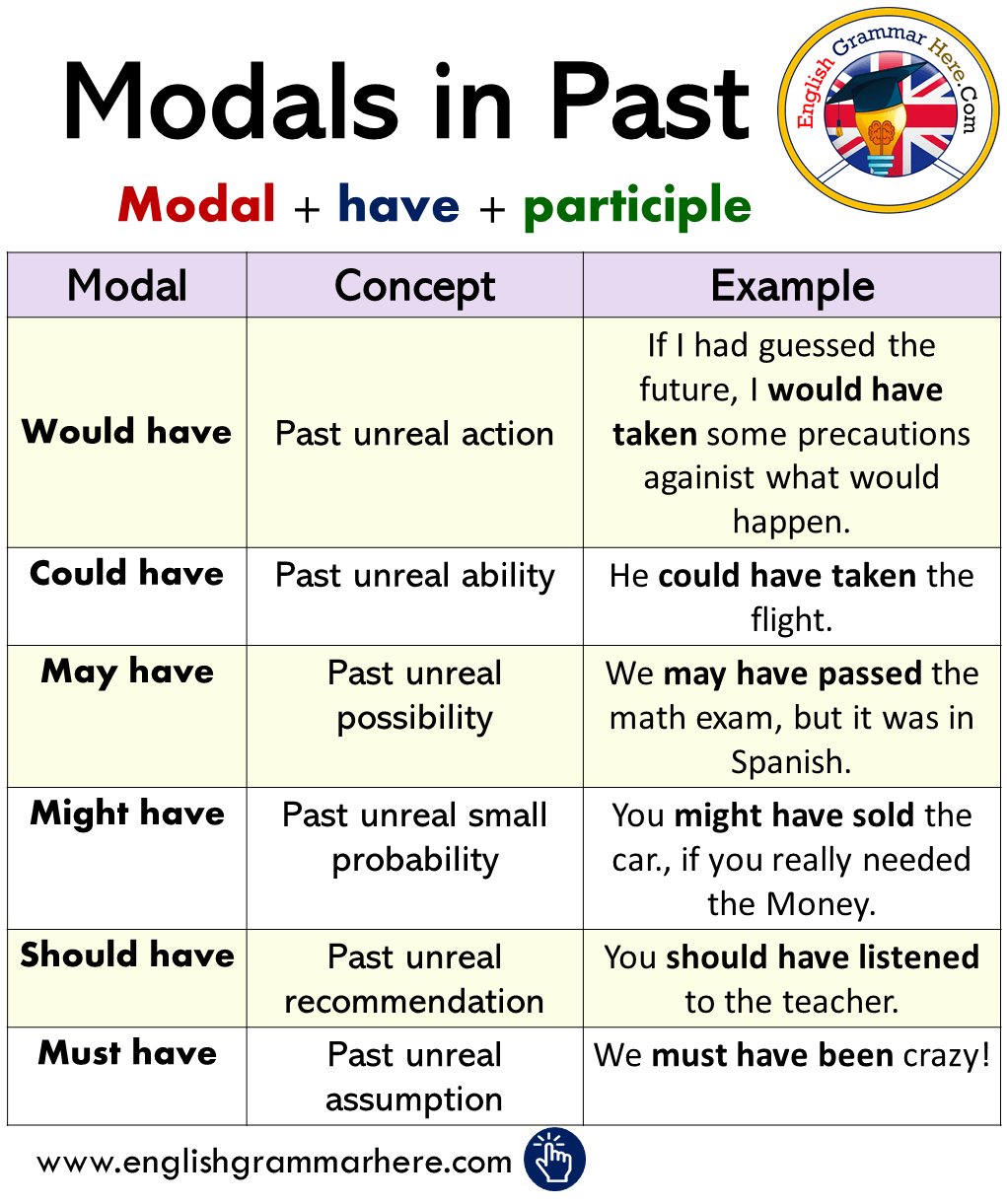
A Modal Verbs Chart With Examples Provides A Clear Guide To How Modal Verbs Like Can, May, Must, And Should Are Used In English.
Actual sentences containing modal verbs and. In this article you have been given all modal verbs (can, could, may, might, shall, should, will, would, ought to, used to, need, must, dare) with examples. They provide additional information about the principal verb.
They Are Used To Express Certainty, Possibility, Willingness, Obligation, Necessity, And Ability.
It works with main verbs to convey a rich array of meanings. Modal verbs, also known as modal auxiliary verbs or just modals, defy the conventional patterns of regular verbs. They are never used alone and are always followed by a principal verb.